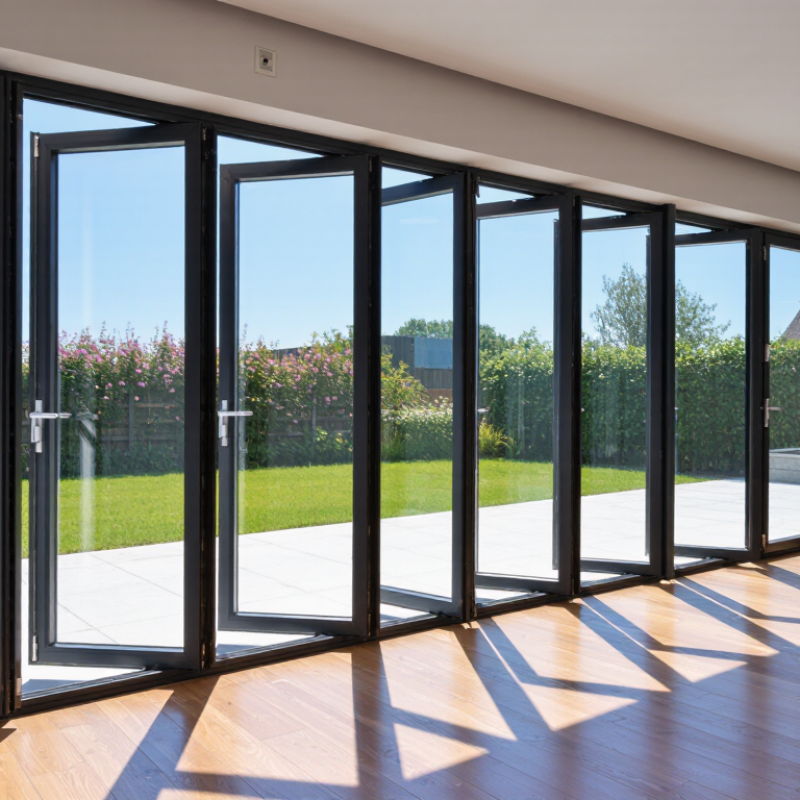
| Frame construction | Aluminium frame without a thermal break | Conducts heat readily; whole-window U-factor is highly system-dependent and is often higher than for thermally broken designs. | Slim, strong profiles can support large glazed openings. | Best suited to mild climates or locations where energy performance is less demanding. Check for condensation risk in cold conditions. |
| Frame construction | Thermally broken aluminium frame | An insulating barrier separates the inner and outer aluminium sections; performance varies with the frame design and glazing. | Reduces heat transfer through the frame and can improve interior comfort. | Ask for a whole-window U-factor and tested air, water, and structural ratings—not just the frame material or centre-of-glass value. |
| Glazing | Double glazing with an insulating gas fill | Two panes with a sealed cavity; a low-conductivity gas such as argon is commonly used in the cavity. | Generally insulates better than single glazing and can reduce indoor heat loss. | Confirm the spacer type, cavity width, seal warranty, and whole-window energy rating. Gas fill alone does not determine performance. |
| Glazing | Low-emissivity (Low-E) coated double glazing | The coating changes how radiant heat passes through the glass; the effect depends on coating selection and climate. | Can help reduce heat transfer while maintaining useful daylight. | Compare certified U-factor and solar heat gain coefficient (SHGC) values. A lower SHGC may help limit unwanted solar gain but can also reduce beneficial winter sun. |
| Glazing | Triple glazing | Three panes and two cavities can improve insulation; the actual gain depends on glass, coatings, spacer, frame, and sash design. | May improve comfort and reduce heat loss in cold climates. | Typically heavier and sometimes thicker than double glazing. Check sash capacity, hinge ratings, opening effort, and whether the added cost suits the climate. |
| Glass safety | Tempered or laminated safety glass where required | Tempered glass breaks into smaller pieces; laminated glass holds fragments together using an interlayer. | Can reduce injury risk in locations where safety glazing is required or advisable. | Requirements depend on local building codes and glass location. Safety glass is not automatically security glazing; verify the specified glass build-up. |
| Weather sealing | Continuous compression seals and well-designed corner joints | Air and water performance depends on the complete sash, frame, seals, drainage paths, and installation. | Helps limit drafts and water entry when correctly designed and installed. | Request independent test results for air leakage and water penetration. Inspect seal continuity and plan for routine cleaning and replacement. |
| Operating hardware | Multi-point locking system | Engages the sash at multiple points when operated; locking-point count and layout vary by product. | Can draw the sash more evenly against its seals and improve resistance to forced entry when paired with suitable components. | Check that locks engage smoothly and that the cylinder, keepers, frame, and installation are compatible. Hardware alone does not establish a security rating. |
| Operating hardware | Hinges rated for sash size and weight | Required capacity depends on sash dimensions, glazing weight, opening angle, and exposure to wind. | Correctly specified hinges support reliable opening and help maintain sash alignment. | Ask for the maximum tested sash weight and size. Larger or heavier sashes may need upgraded hinges and more frequent adjustment. |
| Finish and corrosion resistance | Powder-coated or anodized aluminium finish | Durability depends on coating quality, preparation, exposure, and maintenance. | Protects the surface and offers a range of appearance options. | For coastal or industrial environments, confirm suitability for the exposure and follow the recommended cleaning schedule. |
| Whole-product verification | Certified ratings and installation details | Look for applicable, independently tested whole-window U-factor, SHGC, air leakage, water penetration, and structural performance data. | Makes products easier to compare on measured performance rather than appearance alone. | Ratings apply to specific configurations and sizes. Confirm local code requirements, installation method, warranty terms, and maintenance needs. |


 Your message must be between 20-3,000 characters!