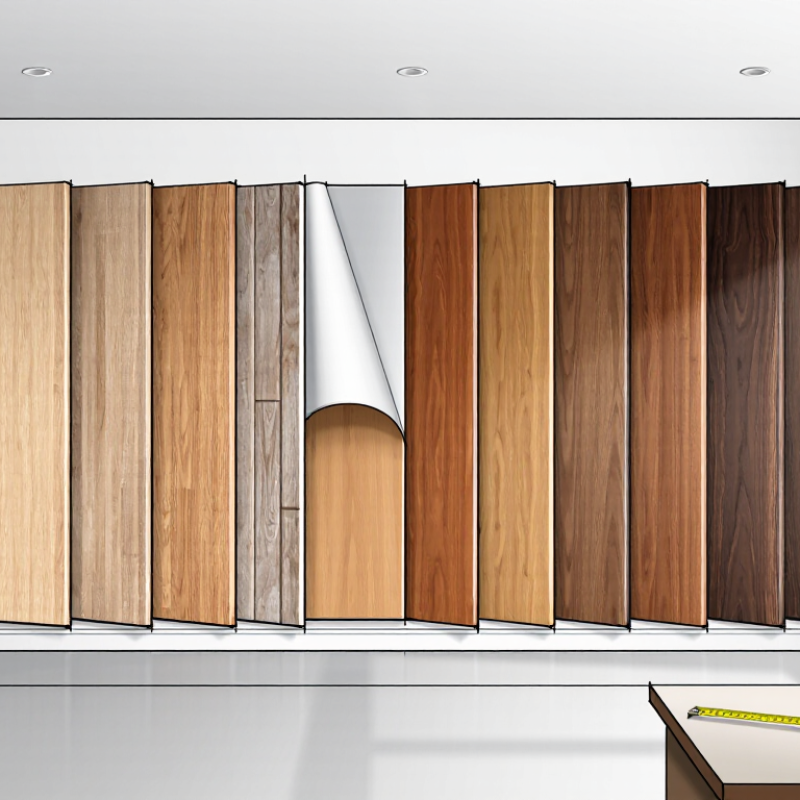
| 1. PVC wood-look panels | Rigid or hollow-core PVC formed or printed with a wood-grain finish. | Bathrooms, laundry rooms, basements, and other areas where wipe-clean surfaces are useful. | Lightweight, moisture-resistant, and generally easy to clean. | Check the product’s fire rating and installation instructions. The surface can look more uniform than natural timber. |
| 2. Wood-plastic composite (WPC) panels | A composite made from wood fiber or flour and thermoplastic, usually with a textured or printed wood appearance. | Feature walls and some sheltered exterior applications, when the product is specifically rated for them. | Often more dimensionally stable and moisture-tolerant than untreated solid wood. | Formulations and outdoor suitability vary. Allow for movement as directed by the manufacturer. |
| 3. Laminated MDF panels | Medium-density fiberboard with a decorative wood-look laminate or printed surface. | Interior living rooms, bedrooms, offices, and dry feature walls. | Provides a smooth, consistent surface and can offer a broad range of wood patterns. | MDF is not intended for prolonged wet exposure; protect cut edges and follow room-use guidance. |
| 4. HDF wood-look panels | High-density fiberboard with a printed, laminated, or embossed decorative finish. | Interior walls where a relatively thin, firm panel is preferred. | Dense construction can provide a crisp, even finish and detailed surface patterns. | Like other fiberboard products, it can be affected by moisture. Confirm thickness, weight, and fixing requirements. |
| 5. Polyurethane 3D panels | Molded polyurethane panels with raised grain, knots, or plank-like relief. | Interior accent walls where a dimensional, carved-wood effect is desired. | Lightweight and capable of reproducing pronounced surface details. | Relief can collect dust, and the finish may need painting. Verify fire-performance information and approved uses. |
| 6. Polystyrene foam panels | Lightweight expanded or extruded polystyrene with a printed, coated, or embossed wood-look face. | Decorative indoor projects where low panel weight is useful. | Easy to handle and often simple to cut with suitable tools. | Can dent more easily than denser materials. Check adhesive compatibility, heat limits, and fire-safety details. |
| 7. Peel-and-stick vinyl panels | Thin vinyl or vinyl-faced sheets with a pressure-sensitive adhesive backing and wood-look print. | Smooth, clean interior surfaces and small decorative updates. | Can be installed without mechanical fasteners on suitable, prepared surfaces. | Surface preparation is important; uneven, dusty, damp, or textured walls can reduce adhesion. Usually less substantial than rigid panels. |
| 8. Fiber-cement wood-grain panels | Cement-based panels reinforced with cellulose fibers and finished with a molded or embossed wood grain. | Exterior cladding or other applications where the product is rated and installed for exposure conditions. | Noncombustible as a material and resistant to rot and insect damage. | Panels are heavier and can be brittle at edges. Cutting, dust control, fastening, and weather detailing require care. |
| 9. Aluminum composite wood-look panels | Thin aluminum skins bonded to a core, with a printed or coated wood-effect surface. | Contemporary interiors and specified exterior architectural applications. | Light for its panel area, dimensionally stable, and available in consistent finishes. | Core composition, fire classification, and outdoor performance differ by product; verify specifications for the intended use. |
| 10. Acoustic PET wood-look slat panels | Decorative slats with a wood-look finish mounted on an acoustic backing, often made from recycled PET felt. | Interior media rooms, offices, and living spaces where a slatted look and sound absorption are desired. | Combines a linear wood-style appearance with an absorptive backing that can reduce sound reflections. | Acoustic performance depends on the full assembly and installation. These panels are not a substitute for soundproof construction. |


 Your message must be between 20-3,000 characters!