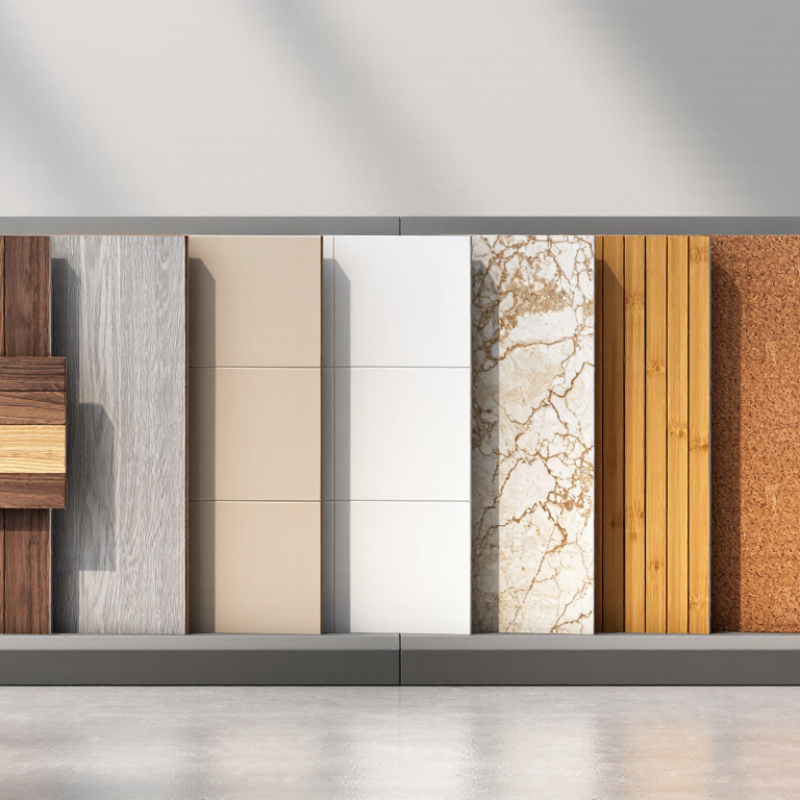
| Engineered wood | Wood veneer over a layered wood-based core. | Natural wood appearance; layered construction is generally more dimensionally stable than solid wood. | Still responds to humidity and standing water; acclimation and moisture-managed installation are important. | Living areas, bedrooms, and some compatible underfloor-heating systems. | Check wear-layer thickness, core construction, installation method, and indoor-emissions documentation. |
| Solid hardwood | Milled boards made from a single piece of wood. | Can often be sanded and refinished; offers a long service life when properly maintained. | Expands and contracts with changes in humidity; generally unsuitable for persistently damp areas or below-grade rooms. | Dry, above-grade residential spaces and selected commercial interiors. | Verify wood species, legal sourcing, moisture requirements, and local installation standards. |
| Laminate | Decorative image layer, wear layer, and fiberboard-based core. | Offers a wide range of designs and a hard, wear-resistant surface; many products use floating installation systems. | Water resistance varies by product; water can damage many fiberboard cores, especially at joints and edges. | Residential living areas, bedrooms, and light commercial settings, depending on the product rating. | Compare abrasion and use-class ratings, joint protection, underlay requirements, and emissions information. |
| Luxury vinyl tile or plank (LVT/LVP) | Multi-layer resilient flooring, commonly available in tile or plank formats. | Comfortable underfoot, easy to clean, and available in many surface designs; water performance depends on the product and installation. | Often suitable for damp-prone interiors, but seams, perimeter details, subfloor moisture, and product limits still matter. | Kitchens, apartments, retail interiors, and other areas where easy cleaning is valued. | Review total thickness, wear layer, fire and emissions documentation, installation method, and local chemical restrictions. |
| Ceramic tile | Kiln-fired clay tile, usually finished with a glaze. | Durable, easy to clean, and available in varied colors and patterns. | The tile itself resists water, but grout, joints, and the underlying assembly need suitable detailing; surfaces may feel cold. | Bathrooms, kitchens, and warm-climate interiors; also used in commercial spaces when appropriately specified. | Check slip performance for the intended use, tile caliber, installation requirements, and local product standards. |
| Porcelain tile | Dense ceramic tile made from refined materials and fired at high temperatures. | Low water absorption and good resistance to wear; available for both interior and exterior applications when rated accordingly. | Suitable for many wet areas; outdoor use requires products and installation details suited to local freeze-thaw and slip conditions. | Bathrooms, public buildings, retail floors, and selected patios or exterior areas. | Confirm applicable product classification, surface finish, slip suitability, and installation-system compatibility. |
| Natural stone | Quarried stone, such as granite, slate, limestone, or marble. | Distinct natural variation and a durable surface when the stone is selected and maintained appropriately. | Porosity, stain resistance, and freeze-thaw performance vary by stone; some types need sealing and careful cleaning. | Entryways, bathrooms, feature areas, and exterior settings where the stone is suitable. | Request the stone type, finish, absorption information, care guidance, and confirmation of intended-use suitability. |
| Bamboo | Flooring made from processed bamboo, commonly in strand-woven or laminated forms. | Renewable plant-based feedstock and a range of finishes; properties vary with manufacturing and product design. | Like wood-based flooring, it can respond to moisture and humidity; avoid standing water and follow acclimation guidance. | Dry residential rooms and selected commercial interiors, according to product specifications. | Check construction type, finish durability, adhesives and emissions documentation, and sourcing information. |
| Cork | Cork granules or veneer formed into tiles or layered flooring products. | Naturally resilient underfoot and provides some thermal and sound insulation. | Sealed products can tolerate routine spills, but prolonged moisture may damage the material or its joints. | Bedrooms, living spaces, and work areas where a softer walking surface is preferred. | Review finish and resealing needs, subfloor requirements, sunlight sensitivity, and emissions documentation. |
| Polished concrete | Concrete slab mechanically ground and polished, sometimes with densifiers or topical treatments. | Hard-wearing, low-joint surface with a finish that can use the existing structural slab. | Performance depends on slab condition and moisture; the surface can be hard, cool, and slippery when wet depending on finish. | Warehouses, retail spaces, offices, and contemporary residential interiors. | Assess slab flatness and moisture, crack-control expectations, slip needs, and the maintenance plan. |


 Your message must be between 20-3,000 characters!